top of page

Consideration through a Simulator (FreeCiv); Foreseen Space-Time-Quantity and Motivation in the Citizen/State.

  • kyonissho
  • Mar 16
  • 2 min read

Freeciv is a simulation of civilization for Linux.

This simulator has 20 years or more reputation. The world is multi-players non-0-sum game, therefore no ideal goal, but a method of a-priori (preceding with no experience) can exist.


I considered power of civilization through this program, as time in foreseen is a structure of the power, if motivations of the power are shared and the space-time-quantity is calculated beforehand.


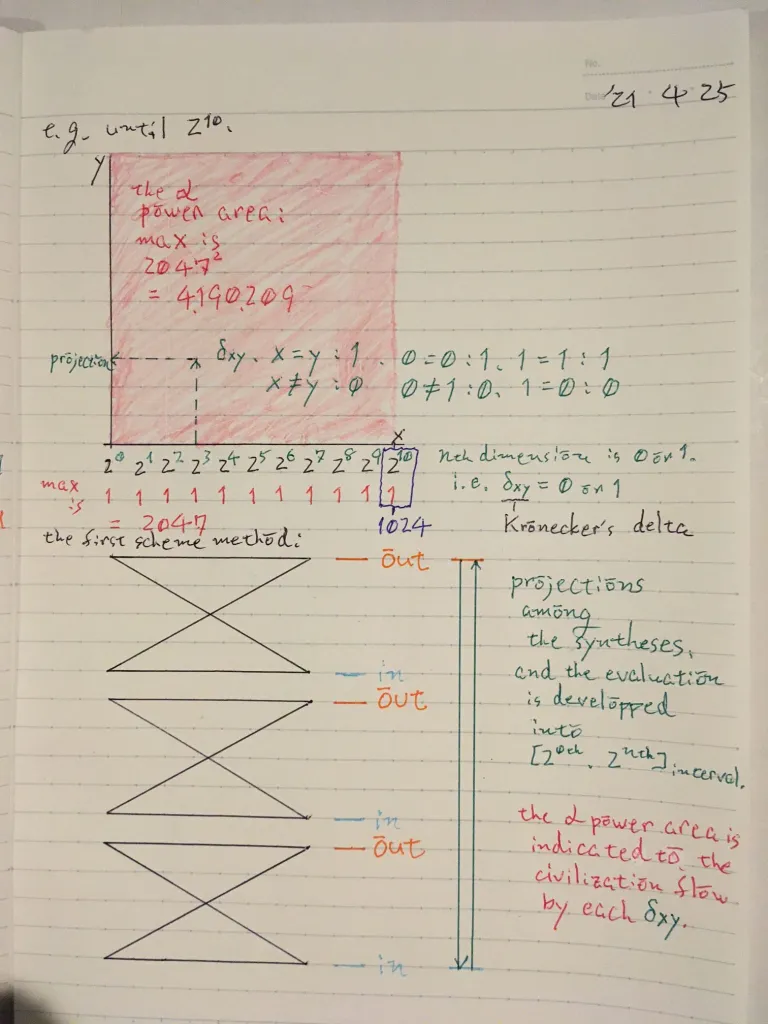
Figures of fig.6’s right page are the regarded accord a-priori structures, and the meta-expression of mathematics.


Then fig.6’s method is applied as fig.1-1~4. Not as fig.2-1~4.


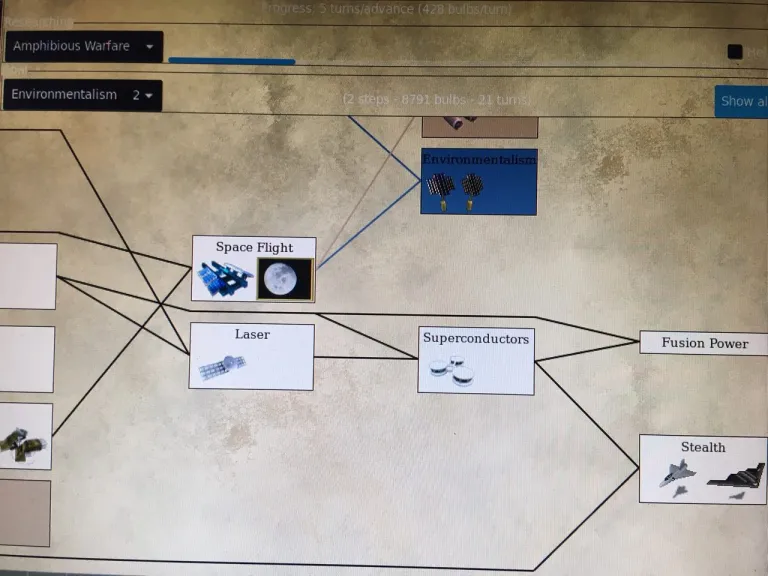
Fig.1-1 I played Holland.
Fig.1-2. Ally Spain.
Fig.1-3 the international relation.
Fig.1-4. the “when” of the civilization.
Fig.2-1. I played Holland.
Fig.2-2. Ally Spain in a world war.
Fig.2-3. the international relation.
Fig.2-4. the “when” of the civilization.
Fig.3 My consideration of civilization (1)
Fig.4 My consideration of civilization (2)
Fig.5 space-time-quantity from life, and reflexive space-time-quantity from future. the entirety of reason concept and the construction.
Fig.6-0 making force^2 or force^d space of the Lanchester strategy in civilization.
Fig.6-1. I’m creating a new simulation board game of unique civilization, with the first scheme method, including with history books.
Fig.6-2. 0 -> 1 means a motivation, the potential realization.
Fig.6-3. the first scheme method and the alpha power distribution. the realizations’ projections in Kronecker’s delta.
Fig.6-4. Uniqueness -> δ axes; the evaluation -> time force.
Fig.6-5. Some references of the evaluation.
Fig.6-6. An instance with the first scheme method. A drawing of civilization axes.

I exchanged the intellectual achievements with the countries where are attacked by an evil country, then the second time force in above description supported the countries to get advance against the evil country who reuses plundered people and properties to invade further


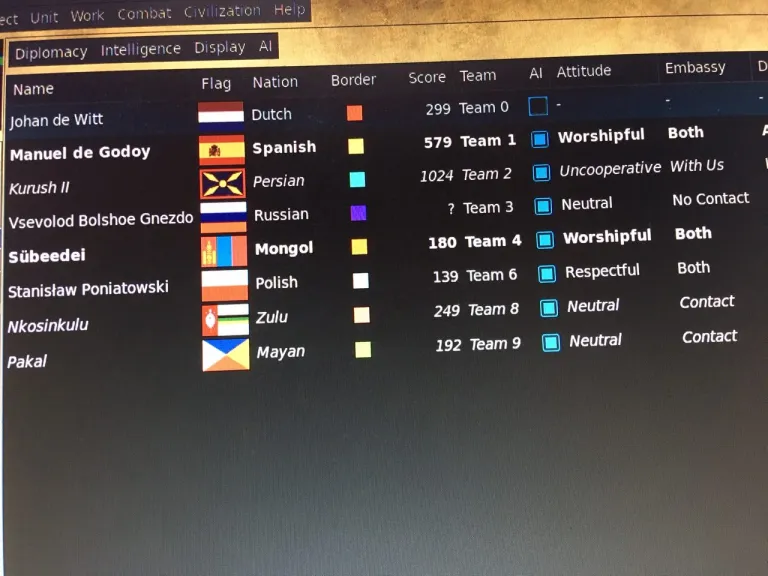
Fig.7-1. All civilization ended.
Fig.7-2. At the moment, the world changed. the ally Spain disappeared almost all.
Fig.7-3. But Spain existed.

+1 player, a ruler, exists in this game for keeping the difficulty. When all civilization in this simulator ends, the ruler left the balance. But ...


Fig. 7-4. The Holland.

The Holland was build with 1/((n*1.4)^2) negative attenuation space against the attacks, and resisted the disorder. Although the negative attenuation effect doesn’t exist the bay cities, and soon bombers will be build and break this order.


The first and second version of this simulation game had run in 16 MHz CPU and 16 MB memory PC about 24 years ago.


Cf.

Consideration of Ark: no2328


Fig.8.
Fig.8.

Some of Linux distribution below as reference. I’m using Fedora 33 scientific now.:


OpenSUSE Linux:


Debian Linux:


Kubuntu Linux:


Fedora Linux:

The GUI of Fedora workstation is GNOME.


Fedora 33 Scientific:

With the applications for science. the GUI is KDE.


(The first post on kyonissho.com/kyos-blog was April 2, 2021.)


(C) Copyright 2021 Kyo Nissho. All rights reserved.

Recent Posts

See All
About this category "from kyonissho com record."

Articles of this category "kyonissho com record" have been transferred from the category "record" of "kyonissho.com/kyos-blog" which I contracted until October 2026, the oldest is the top page and the


Comments


© 2025 Kiyom Nishio (Kyo Nissho). All rights reserved.


bottom of page